Wholesale pillow covers: a private label buying guide
By Abhijat Paliwal, founder, Abhi Home®, third-generation Indian home textile manufacturer (since 1965).
In the US trade, "pillow covers" usually means decorative throw pillow covers: the square and lumbar covers that sit on sofas, beds and chairs. In India and the UK we call the same product a cushion cover. This guide is about that decorative product, bought wholesale for retail or e-commerce, and it is written from the factory floor. At Abhi Home® we have made home textiles in India since 1965, and decorative pillow covers are one of our core categories. Below I set out the decisions that decide price, quality and sell-through: size and insert fit, construction, closures, covers versus filled pillows, testing and labeling, seasonal timing and how to compare quotes.
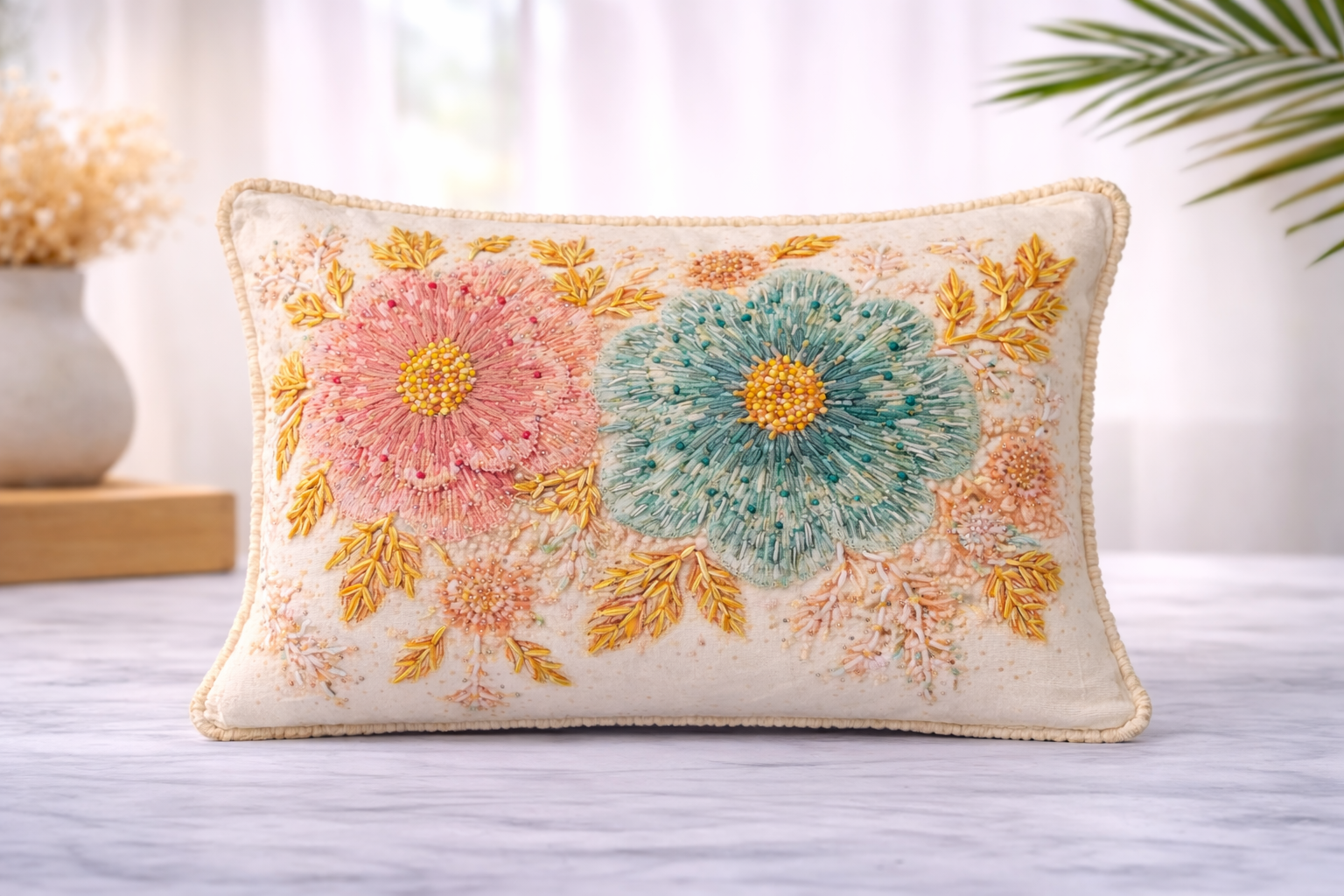
Hand embroidered lumbar pillow cover, made in India by Abhi Home®
What wholesale pillow covers means
Search for wholesale pillow covers and you will find three different products mixed together: decorative throw pillow covers, bed pillowcases for hotels, and zippered pillow protectors. They are made, tested and priced differently, so the first line of any brief should say which one you are buying. Abhi Home® makes the decorative kind, as covers or as filled pillows, always as OEM / private label production under the buyer's brand.
There is a second split inside the decorative category. Finished stock from a wholesaler is quick to buy but carries someone else's design, size and label, and the same cover can appear on a competitor's site the following week. A private label program takes longer to set up, but you decide the fabric, the construction, the size, the label and the packaging, and the design belongs to your range. Everything below assumes the second route.
US pillow cover sizes and insert fit
Pillow cover sizing is more standard than most first-time buyers expect. These are the formats we make most often for US and European ranges:
Cover size (inches)
Approx. size (cm)
Where it sits in a range
16 x 16
40 x 40
Accent chairs and layering in front of larger squares
18 x 18
45 x 45
The core sofa square for most ranges
20 x 20
50 x 50
Deeper sofas, beds and a more generous look
24 x 24
60 x 60
Oversized statement pieces
12 x 20
30 x 50
The standard lumbar for beds and chairs
Most strong ranges are built on one or two core squares plus a lumbar. That gives enough shapes for styling without splitting production across too many sizes.
The detail that separates a professional specification from an amateur one is insert fit. A cover should be cut slightly smaller than the insert it is sold with or styled on, typically 2 to 3 cm under the pad size (roughly an inch). The filled pillow then looks plump and the corners fill out. Cut the cover the same size as the insert and you get a slack, under-filled look that no product photo can rescue. A slight taper at each corner during cutting also stops the pointed "dog ears" that make a good cover look cheap once it is filled. If you sell covers only, print the recommended insert size on the packaging, so your customer buys the right pad.
Constructions and what drives their cost
The surface treatment is the design language of the range, and each technique carries its own cost logic. These are the constructions we make, with the trade-offs I explain to buyers.
Woven designs
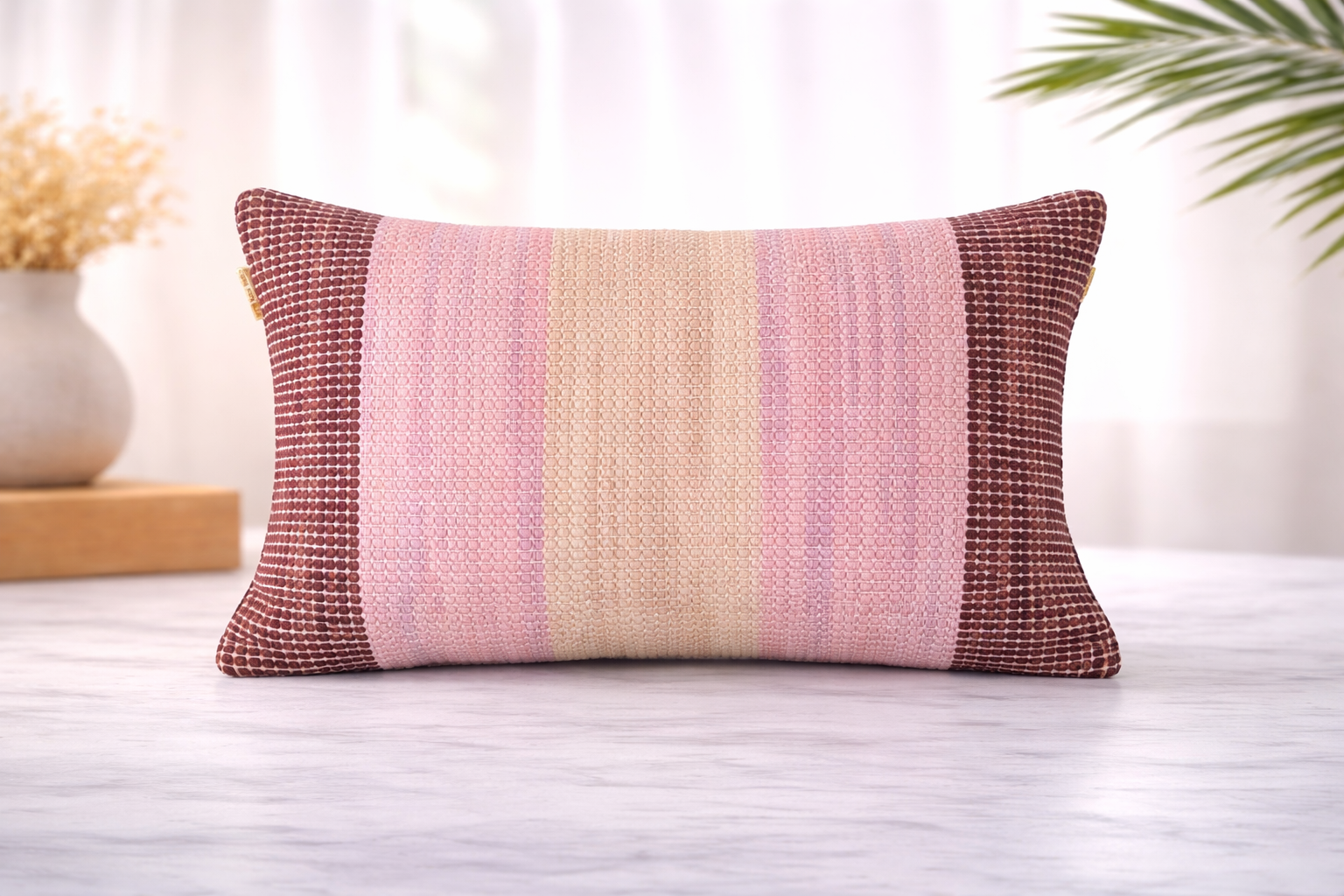
Jacquards, dobbies, yarn-dyed stripes and textured weaves put the pattern into the cloth itself. They cost more in loom setup but nothing in printing, they wear their design permanently, and they look good from both sides. A woven stripe is also one of the easiest covers to repeat season after season, because the yarn colors are on file and the construction does not depend on handwork.
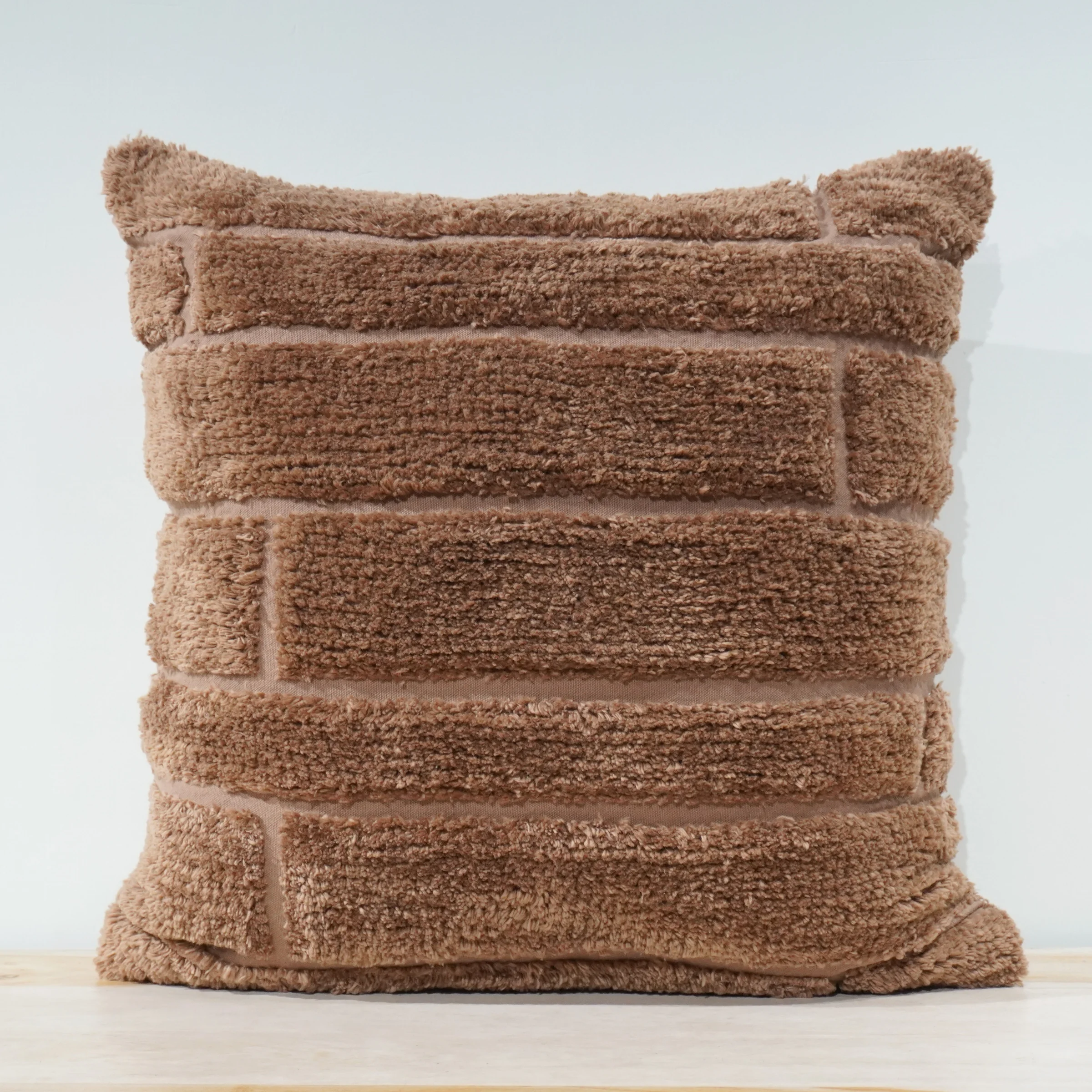
Tufting raises chenille, cotton or bouclé yarns above a flat ground to create high-relief texture that photographs well and sells at the tactile end of the market. The specification points are the quality of the back cloth and how securely the pile is anchored, because a tufted face that sheds becomes a returns problem. Ask how the pile is locked on the reverse, and wash the sample before you approve it.
Embroidery adds relief and perceived value, from tone-on-tone scrollwork to raised floral thread work like the lumbar at the top of this article. Stitch density is the specification that matters. Too few stitches and the design looks thin; too many and the ground fabric puckers. Ask for the stitch count, and judge the sample filled, under a low side light that shows every lift and pucker. Hand embroidery and machine embroidery can sit in the same range, but they price and repeat differently, so keep hand-worked designs for hero pieces. Our guide to embroidery and handwork specifications covers this in detail.
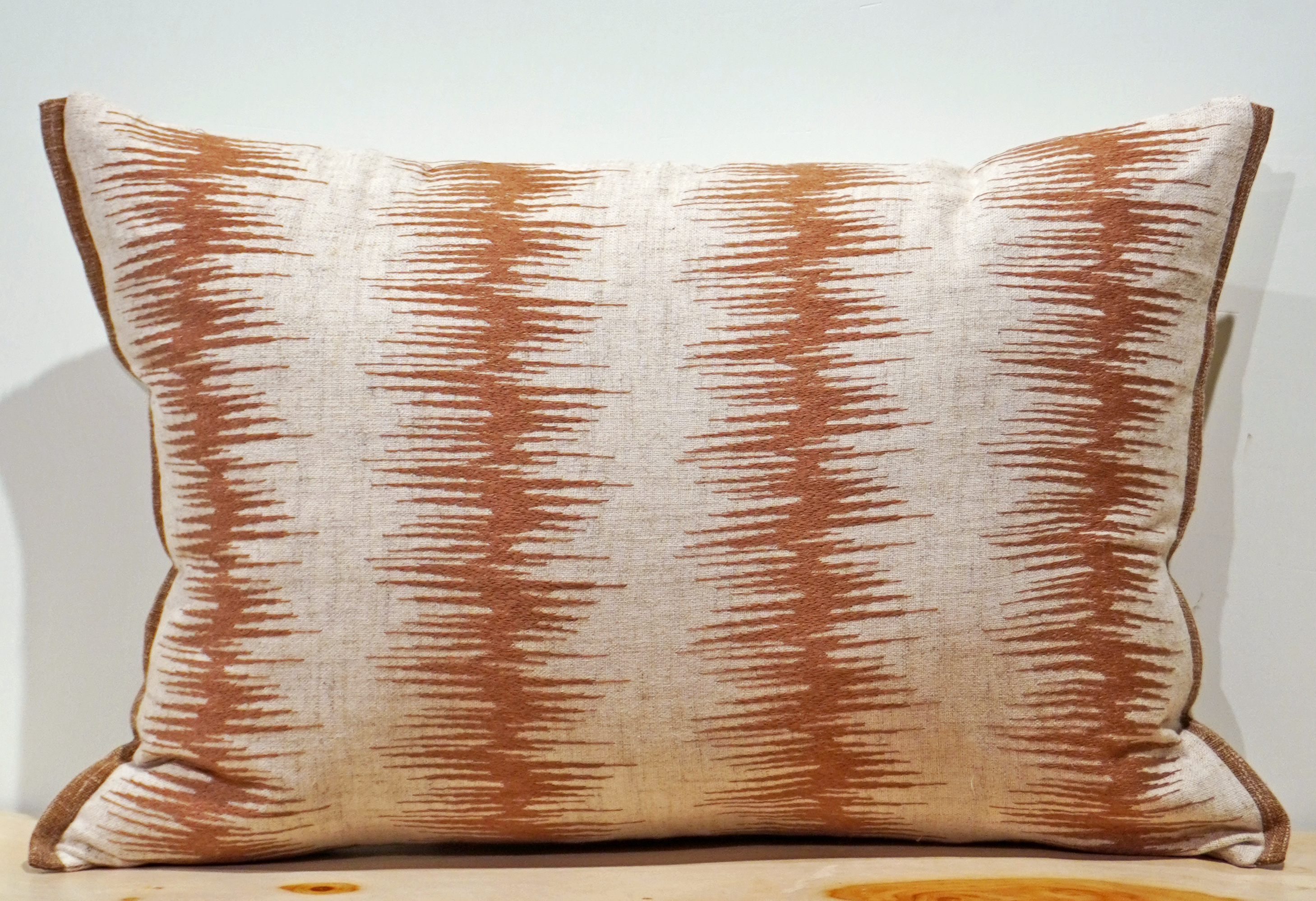
Ikat-inspired embroidered lumbar on linen (Abhi Home® style AH-CC-25-1306)
Appliqué and patchwork
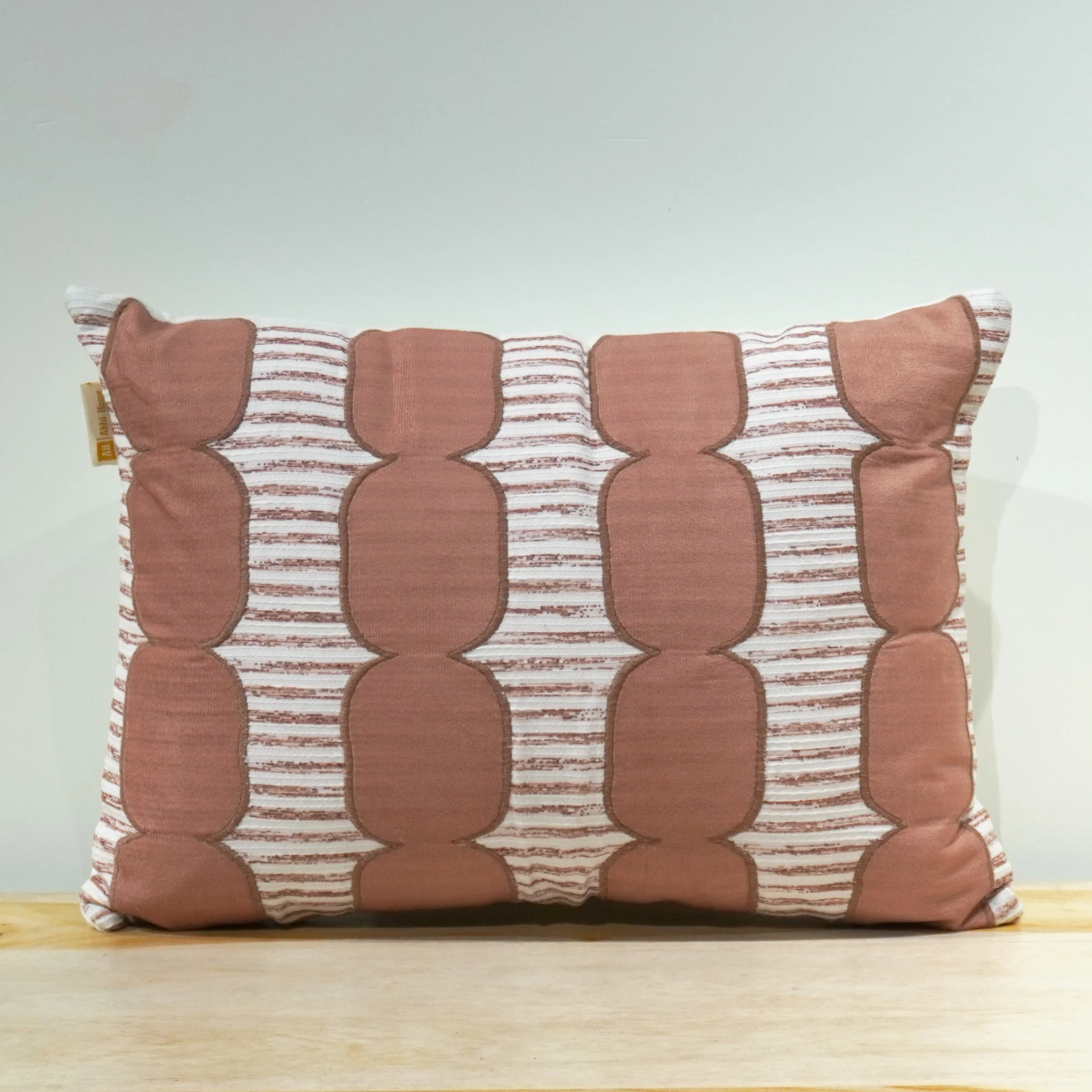
Layered fabric shapes, cut and stitched onto a base cloth, give a bold graphic look that is hard to reproduce cheaply. The cost sits in cutting and stitching time, so the number of pieces per cover drives the price more than the fabrics do. Specify the stitch type around each shape and approve the edge finish on the sample, because frayed appliqué edges are the first thing a customer notices.
Appliqué on a striped woven base (Abhi Home® style AH-CC-24-1270)
Printed covers and base fabrics
Screen printing suits bold designs with a defined palette; digital printing suits photographic detail and shorter runs without screen costs. Check registration (do the colors meet where they should?) and penetration (does the color sit only on the surface, or go into the cloth?). Under every construction sits a base fabric: plain-woven cotton, slub cotton, linen-cotton blends, cotton velvet or chenille. Whatever the fiber, put a fabric weight in GSM in the tech pack. Two covers can look identical in a photo and feel completely different in the hand, and weight is where that difference hides.
The most common range mistake I see is a collection where every design needs a different base cloth and a different setup. It looks wonderful on a mood board and costs a lot to run. The strongest commercial ranges take one or two base fabrics and stretch them across print, embroidery and texture. Our cushion cover buying guide goes deeper on fabrics and range building.
Closures, edges and the details behind returns
Closures are invisible in the product photo and very visible in the returns data. Three options cover almost every program:
Concealed zip. The retail standard, usually along the bottom seam and hidden under a flap of face fabric. Specify the zip quality and length, and check that the runner glides after washing. A wavy zip line is one of the fastest signals of a poorly made cover.
Envelope back. Overlapping back panels with no hardware. It costs less and washes without metal parts, but the overlap must be generous or the insert shows through.
Buttons or ties. Design features in their own right. Slower to make, and worth it where the range story calls for them.
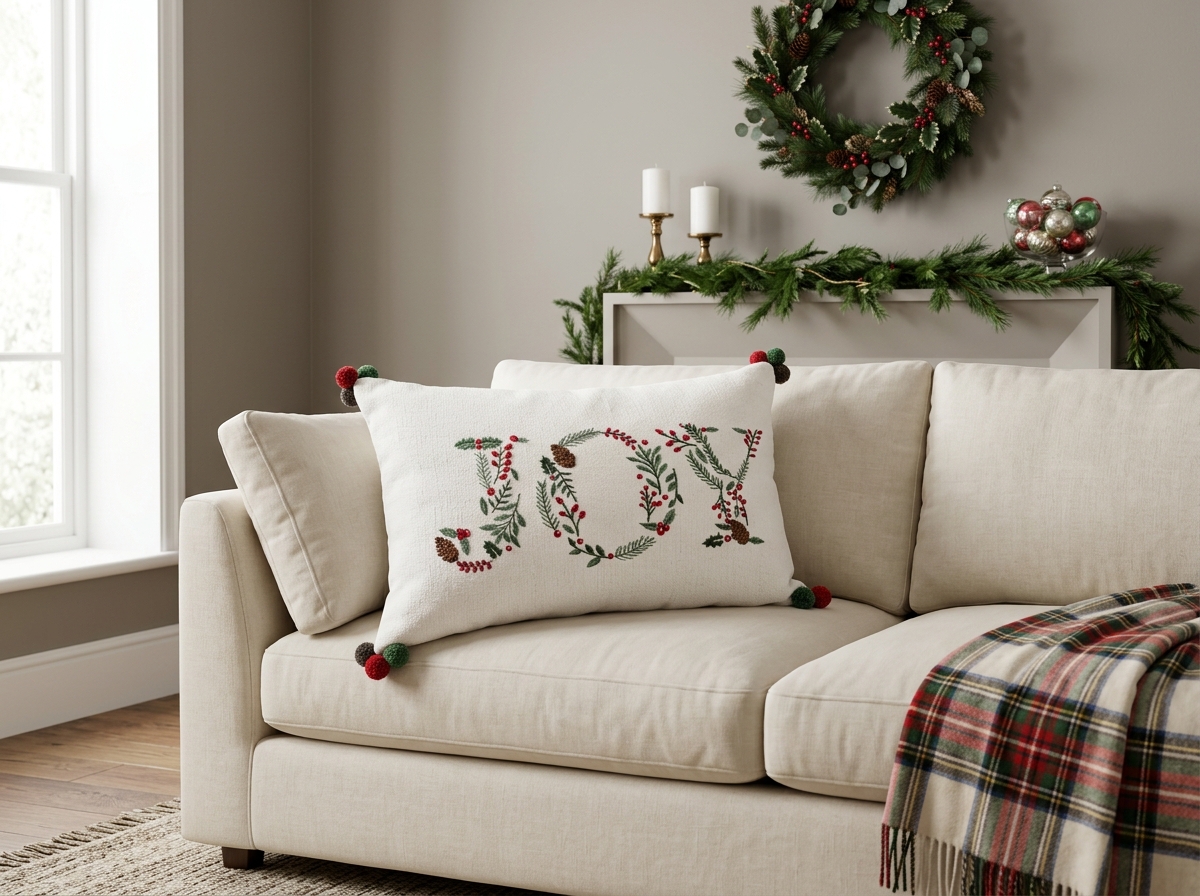
Edges are a design decision with cost attached. A plain knife edge is the simplest. Piping and flanges frame the design and add a cutting and sewing step. Ruffles, fringe, tassels and pom-poms add perceived value, and each one needs its own colorfastness and attachment check, because a trim that bleeds or pulls off in the wash fails the whole cover. Write the seam type, stitch density and whether seams are overlocked inside into the tech pack. Small details, but together they decide whether a cover survives repeated washing.
Covers only or filled pillows?
The next structural decision is whether to buy covers alone or finished pillows. Covers pack flat, so a carton, and therefore a container, carries far more units, and you pair them with inserts sourced near your market. Filled pillows arrive shelf-ready and save you managing a second supplier, but you ship a lot of air. Plenty of our buyers run both: covers for the broad range and filled pillows for a few volume lines. The honest way to decide is to have your manufacturer cost both routes to your destination and compare landed cost per unit. Our cushion filling guide explains the insert options.
Two rules change with that decision. First, customs: in the US Harmonized Tariff Schedule, heading 6304 covers other furnishing articles, excluding those of heading 9404, and a woven cotton cover falls under 6304.92. Heading 9404 covers articles of bedding and similar furnishing, including cushions and pillows, that are stuffed or internally fitted with any material, and filled pillows fall under 9404.90. Check the current lines and duty rates on the USITC Harmonized Tariff Schedule and confirm them with your broker. Second, state law: California's furniture and bedding law defines "bedding" to include pillows and cushions that are or can be stuffed or filled, and its Bureau of Household Goods and Services law book sets out licensing and law label requirements. If you sell filled pillows in California, settle this before production, and ask your compliance team how covers sold on their own are treated.
Testing and labeling for the US market
A pillow cover is washed, rubbed and left in the sun, so the same four checks come up on almost every program. The American Association of Textile Chemists and Colorists (AATCC) publishes standard test methods for each of them:
What can go wrong
AATCC method
What to agree with your factory
Color bleeds or fades in the wash
TM61, Colorfastness to Laundering: Accelerated
Wash conditions and the minimum grade for each color
Color rubs off onto clothes or sofas
TM8, Colorfastness to Crocking: Crockmeter
Dry and wet grades, especially for dark colors and velvet
Color fades in daylight
TM16.3, Colorfastness to Light: Xenon-Arc
Exposure level for covers that sit near windows
Cover shrinks and the insert no longer fits
TM135, Dimensional Changes of Fabrics after Home Laundering
Shrinkage tolerance, measured on the made-up cover
Your QA team or retailer manual will set the exact grades. What matters is that the tests and pass levels are written into the specification before bulk fabric is dyed, not discovered after the goods arrive. Our article on how quality control works inside a home textile factory explains where these checks sit in production.
For labels, the Federal Trade Commission's guide to labeling requirements under the Textile and Wool Acts lists pillows, pillowcases and cushions among covered household textiles. The label shows fiber content, country of origin and the identity of the manufacturer or another responsible business. Our covers are labeled made in India. The FTC's Care Labeling Rule is written for apparel, so it does not require a care label on a pillow cover; we still recommend one, matched to the wash test the sample passed. If a design is aimed at children 12 or younger, for example a kids' room cover printed with cartoon animals, check the Consumer Product Safety Commission's children's products guidance on third-party testing and certification.
Planning seasonal pillow cover programs
Pillow covers are one of the cheapest ways for a store to change its look, which is why seasonal programs matter so much in this category. We run seasonal capsules for spring and summer, autumn and winter, Halloween, Christmas and Easter, alongside the evergreen range.
Three habits make seasonal programs work. Plan backwards from your in-store date, not forwards from the day you send the brief, and confirm the timeline with us against your exact designs. Build seasonal designs on the same base cloths as your evergreen range, so the seasonal story is a new embroidery, appliqué or print rather than a new fabric development. And keep seasonal quantities honest: a Halloween cover that does not sell on November 1 has a long wait until next October, which is exactly where flexible MOQs help.
Building a coordinated range
Pillow covers rarely sell alone. The buyers who get the most from a factory relationship coordinate covers with the other soft furnishings in the same room, using shared colors and base cloths. Curtains and window panels pick up the same palette in a living room; see our curtain and window panel page. In a bathroom, a shower curtain can carry the same print story; see our shower curtain page. On the bed, a lumbar cover finishes a quilt or coverlet set.
Contract and hospitality programs work slightly differently, because an interior designer usually sets the fabric and size schedule for the whole scheme. If you are sourcing for a restaurant or hotel project, brief the factory with the designer's schedule in hand.
We also ship coordinated soft furnishings and bath textiles to buyers in many markets. If you buy for one of these countries, these pages cover what we make for your market:
A clear brief is the cheapest quality control you will ever buy. When every factory quotes against the same document, the quotes become comparable and the sample approval becomes a real check. This is what I ask buyers to send:
Product and sizes: decorative covers or filled pillows, each size, and the insert size each cover is meant for.
Construction: woven, tufted, embroidered, appliqué or printed, with artwork or reference photos.
Base fabric: fiber, weave and weight in GSM, plus any organic or recycled requirement.
Colors: color standards and the number of colorways per design.
Closure and edges: concealed zip, envelope or buttons, and knife edge, piping, flange or trims.
Testing: the methods and grades your QA team requires.
Labels and packaging: fiber and origin label, care label, brand label, hang tag or insert card, polybag, barcode and carton marks.
Quantities and dates: target quantities per design and color, and your in-store date.
Shipping basis: FOB, CIF or DDP and the destination. Our guide to FOB vs CIF vs DDP explains the trade-offs.
How to compare wholesale pillow cover quotes
Two quotes are only comparable when they describe the same cover delivered on the same terms. Line them up against these checks before you look at the unit price:
Check
What to ask
Why it matters
Fabric weight
GSM of the base cloth
A lighter cloth is the easiest way to make a quote look cheaper
Size and fit
Finished cover size and the insert it is cut for
A cover cut the same size as the insert looks slack on the shelf
Construction detail
Stitch count, pile weight, number of appliqué pieces
Less work per cover means a lower price and a flatter look
Closure and trims
Zip quality, overlap size, trim type
Closures and trims drive returns
Testing
Which AATCC tests are included and at what grades
Testing done after bulk is too late to fix anything
Packaging
Polybag, insert card, hang tag, sets of two
Packaging can change the landed cost noticeably
Certification
Certificates naming the production site and product scope
Any claim you print must be backed by documents
Shipping basis
FOB, CIF or DDP; covers only or filled
Freight and duty decide the real landed cost
On certification, Abhi Home® holds BCI, GOTS, OEKO-TEX and GRS certifications, with OEKO-TEX and GOTS options across our cushion range and recycled options where your claims need them. If you plan to print a claim on the packaging, check that the certificate covers the product and the site that makes it. Our article on OEKO-TEX, GOTS and GRS explains what each one proves.
Frequently asked questions
What size pillow covers sell best wholesale?
Most ranges are built on one or two core squares, usually 18 x 18 or 20 x 20 inches, plus a 12 x 20 inch lumbar. Smaller 16 inch squares and oversized 24 inch squares work as accents. Keep the size run short so fabric and setups stay concentrated.
Should a pillow cover be smaller than the insert?
Yes. We cut covers slightly under the insert size, typically 2 to 3 cm (roughly an inch), so the filled pillow looks full and the corners fill out. A cover the same size as its insert looks slack.
What is the minimum order for wholesale pillow covers?
At Abhi Home® MOQs are flexible and depend on the construction, fabric and number of colorways. Share your target quantities per design and request a quote against your specification.
Can you make pillow covers under my brand?
Yes. Abhi Home® is an OEM and private label manufacturer only. Every program runs under the buyer's brand, with your labels, packaging and barcode, made to your tech pack.
Do you supply covers with inserts?
Yes, we make both covers only and filled pillows. Covers only usually cost less to ship because they pack flat, while filled pillows arrive shelf-ready. We can cost both routes to your destination so you can compare landed cost.